Non-believers who—despite declaring themselves agnostic or atheistic—observe with interest the religious phenomenon and the lives and behaviors of believers, may find surprising the diversity of attitudes they discover among those of us that call ourselves people of faith. It may seem strange to them, to be more precise, that the same beliefs produce such disparate fruits. They will regard with some astonishment how there are believers with a highly negative vision of contemporary society (those who emphasize that the kingdom of God “is not of this world”), and others who, on the contrary, live their faith as a call to optimism about the present and future of humanity (those who underline that “the kingdom of God is already among you”). Some men and women of faith, as a result of their religiosity, adopt intransigent positions, while others, as a direct consequence of their faith, seem to grow every day in the exercise of tolerance. Some people are moved by their creed towards rigidity, scrupulosity and a keen awareness about their own sins and the sins of their neighbors, while for others the very same confession is an invitation to become more indulgent with their own weaknesses and the weaknesses of others. Some, immersed in their God, feel called to dialogue with everyone; others, inspired by the same Gospel, become harsh sentinels of morality and orthodoxy. It would even seem that what some people believe helps them to laugh with ease while others forget to smile because of their religion.
How can we explain these differences?
It seems obvious that part of the answer would have to be sought in the psychology of each person, in some psychic dispositions prior to the religious option, which determine how this option will be lived out. In the faith of someone who tends to melancholy and towards a pessimistic view of reality, for instance, it is likely that sin will have a central place. Someone who, on the contrary, tends by nature—that is, by the psychic dispositions prior to the religious option of which we are speaking—to enthusiasm and optimism, will surely focus more on the grace and mercy of God.
Now, beyond the influence of our deepest psychological tendencies, which we can do little or nothing to modify (and of which we are not always aware), perhaps there would be a more rational aspect of the matter at hand, in which we could certainly have a say: the understanding that each one has of faith in itself. We all have expectations about the role that our beliefs will play in our lives. These expectations are independent of the content of the faith we profess, and every believer has them—not only the Christian, or even the religious person, but anyone who adheres to a certain creed. Regardless of the doctrinal content of what we believe in—for some it will be the gospel of Jesus, for others the revelations of Allah to Muhammad, for others it may be faith in a political or economic doctrine—we all have hopes about what our faith can do for us: and in these hopes there is always an implicit model of what faith is and should be.
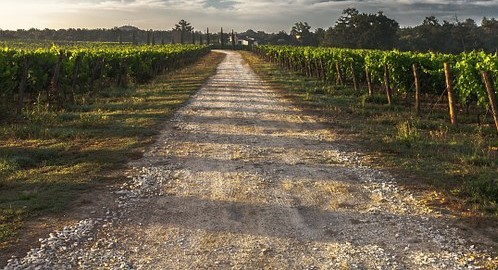
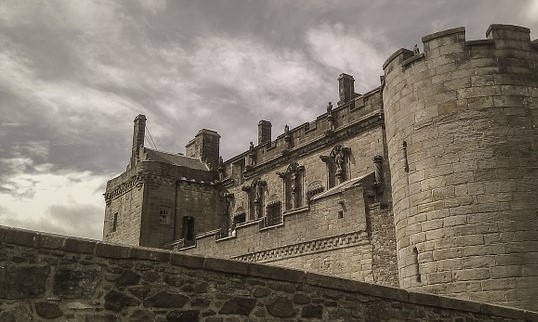
Among the variety of models that exist there are two that can largely explain the different fruits that faith (any faith) produces in its followers: to understand faith as a castle or as a road.
Those who follow the first model understand their beliefs as a fortress whose main purpose is to provide security. They feel protected within the walls of their creed. Above all, they will care about the solidity and stability of the walls (that is, the truths) that protect them. They will be interested in emphasizing the firmness and immutability of the foundations on which their vision of the world is sustained. A consequence of this model will be a clear delineation of who is inside and who is outside the believing circle. The fundamental expectation of believers who see faith as a castle is to feel safeguarded, protected from the uncertainties of life.
Those who understand their faith as a road or a path, instead, emphasize the evolutionary character of their spiritual life, because they feel that they are on the move, always on a journey. They will be interested in reflecting about the place where they come from (getting to know the history of their confession) and where they are going (what horizons may lay ahead). A consequence of the “faith as a road” model will be that its followers will naturally be open up to meet new traveling companions: people who may come from very different departure points than their own, but who, at least during a stretch of the way, advance side by side with them. The fundamental expectation of these people is not so much the final destiny towards which they are heading as the hope of finding God in the journey, in the very experience of moving ahead, in a path of permanent growth.
As it can be easily deduced from the previous paragraphs, we do not think that both models are equally valid, even if it is true that both may have strengths and weaknesses. It seems to us that faith lived as a castle often prevents the growth of its adherents. It tends, moreover, to produce fruits of intolerance and division, and often may promote suspicion of others, of those who live in other castles.
Faith understood as a path is, in our view, healthier, and more realistic. It encourages those who espouse this model to become aware of their narrative identity: they understand that the journey transforms them, that the landscapes they’ve seen enrich their perspective and their identity. It is a model that tends towards the respect of others, whatever their creed, because it sees them also in a journey. Finally, this model tends to be more prone to seek dialogue with strangers: in the mentality of its followers there is implicit the conviction that they are far from possessing the fullness of truth—it is precisely to discover it that they are on the move—, and therefore they welcome the possibility of contrasting their beliefs with those of others, through a conversation among equals.
It would be highly advisable, in summary, for believers to meditate once in a while about the model that underlies our experience of faith: for me, is faith a castle or a road?