village-center-Saint-Paul-Community

Headline news
Friday 28 th November 2025


This Sunday we begin the season of Advent, and in the readings we will hear St. Paul telling us, “It is time for you to wake up from your slumber” (Rom 13:11), and Jesus reiterating the same message: “Stay awake!” (Mt 24:42).
 
With these two similar calls, we enter fully into the spirit of Advent. It is a time, then, to awaken, to be attentive, to scan the horizon and perceive in it the signs of God’s presence, which is coming and will be born to us at Christmas. Advent is also a time to identify the breaches that Jesus mentions in the same passage: cracks through which our good intentions, our desire to be good people and to live according to the Gospel, can slip away.
 
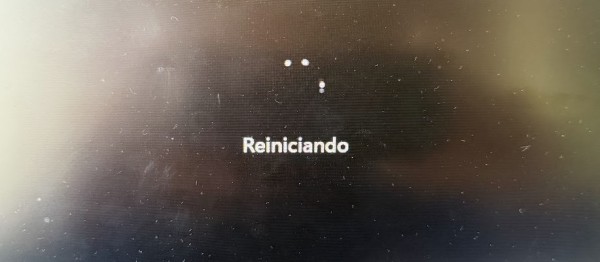
In these times, in which we live immersed in the digital revolution, perhaps an analogy with technology can help to illustrate what this season of Advent is all about. We know that every now and then we must restart a computer or a phone. We reset them or reboot them. Sometimes we humans also need a reset, and Advent gives us the opportunity to do so.
 
We restart our computers because something isn’t working properly: some harmful habit persists in the system, an error that has remained, causing problems, and that needs to be fixed. And we also restart our computers to access updates that are now available and that, once installed, will allow everything to work better.
 
To restart a computer, you have to turn it off. The same goes for us. Every now and then, we need to «shut down the system» in the sense of silencing the many noises that deafen us, that come from all sides and prevent us from thinking clearly. There is a lot of noise in politics, on social media, in television talk shows, and there is also noise that arises from within us in the form of old grudges and open wounds that we haven’t been able to heal. All this noise leads us to accumulate tensions, anxiety, resentments, bewilderment, and anguish.
 
In Advent, let’s begin by turning off the noise. One of the main characters of this season is John the Baptist, who went to the desert: that is, he distanced himself from the noise. From John, we can learn his choice to refuse to live amidst a whirlwind of activity, constantly absorbing information and noise, without time to process it. In the desert, John will offer a clear and new message because he has known how to distance himself from the noise—to then be able to think, and to understand what God wants from him.
 
And so, in Advent, after switching off the system, let’s restart it —with a different attitude. We can identify what was wrong within us before: what unhealthy habits were bothering us. Perhaps we had entered a cycle of negativity and pessimism. Perhaps we had started drinking too much or wasting time with other activities that brought us nothing positive. Perhaps we had begun to fuel a conflict with someone, to cultivate hatred, resentment, that kept growing. In Advent, we restart the system, our lives, from scratch, without those harmful habits.
 
And, in Advent, as we restart—as we awaken—we also seek new updates: we prepare to look at others with fresh eyes, to begin healthier habits. We watch for resources available to us, that until now we had not been using: people we should listen to a little more, readings that could enlighten us, acts of solidarity with the poor, which will strengthen our faith. Advent can be all of this: a true reset of the heart.


Friday 12 th September 2025


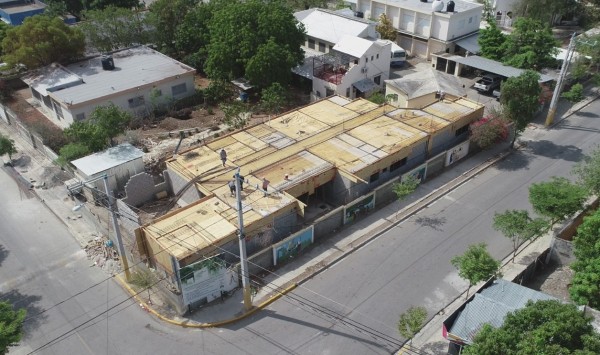
We are delighted to report that construction has been underway for several months to expand our parish Health Center in Sabana Yegua.

The current center, which has been in operation for almost 40 years, has long offered general consultations, dentistry, laboratory services, pharmacy, and optometry. Recently, we have added gynecology, sonography, pediatrics, and internal medicine services to these services.

With that, the center has become too small. Consequently, the decision was made to erect a brand-new building on the parish compound. With this construction, we will fulfill our dream of having a suitable medical center with several specialties, which is a great need in the parish of "La Sagrada Familia," which has a population of 30,000. Our physiotherapy center (currently located in another building) will also be relocated there, expanding its facilities.

All of these services, aimed at the most vulnerable population, will prevent patients from having to travel to the public hospital in Azua, which is always very congested. In Sabana Yegua, they will have quality service, provided by the Church.

We are grateful for the donations from the Archdiocese of Milwaukee, through its institutions and parishes, and to many friends who, with their generosity, are making this project possible. We will tell you about the opening of the new health center in a few months!


Friday 22 nd August 2025


In this coming Sunday’s Gospel reading (21st Sunday in Ordinary Time, Cycle C), we will hear that Jesus, responding to the question of whether only a few are saved, says the following: «Try to come in through the narrow door. Many, I tell you, will try to enter and be unable» (Luke 13:24).
 
At first, this sentence may seem like bad news to us. Couldn’t God have designed a much wider gate, one through which we could all pass easily? Indeed, don’t we tire of preaching that God is pure hospitality, that precisely one of the emphases of Jesus’ message was the mercy of the Father, who opens his arms wide to the whole world? How can we reconcile this idea with the image of the narrow door?
 
It seems to me that here Jesus is underscoring something fundamental, something we should never forget. That the spiritual life requires effort. Is the Gospel good news, and a path to fulfillment and happiness? Absolutely. Does it require sacrifice, deep inner work, and a firm will to overcome our most selfish tendencies and our pride? Yes, that is also true.
 
The path that Jesus offers is not a playful walk on the beach. It demands discipline and a patient work of self-knowledge, to discover within ourselves both what hinders us (which must be abandoned) and the living presence of the Spirit in the depths of our hearts (which must be welcomed and strengthened). It is a journey of transformation… that everyone can do (this is the good news!) —and that is why Jesus also affirms that all kinds of people, from the East, the West, the North, and the South, will sit at the table in the Kingdom, but that no one is exempt from walking.
 
I like to think that the narrow door is, in fact, a gift. Because those who arrive at its threshold with a swollen ego cannot cross it; or with suitcases packed to the brim with petulance, or resentment, or vanity, or a desire for prominence, or a lust for power. We must abandon all of that so that, light, simple, and at peace with the exact dimension of our goodness, our achievements, and our failures, we can then happily cross over to the other side. The narrow door is a gift because it reminds us of so many useless things that we carry around with us —things we tend to defend with passion, and yet they serve no purpose. Or they serve no purpose for the only thing that really matters: sitting down to enjoy the banquet in the kingdom.


Thursday 19 th June 2025


If Catholics knew more about Judaism—its culture, feasts, and rituals—we would understand Jesus of the Gospels far more deeply, as He was born and died a Jew. The feast of Pentecost, which we have just celebrated, serves as a striking example. Pentecost was already one of the most important festivals in the Jewish calendar: the feast of Shavuot—which the Greek of the New Testament rendered as Pentecost, just meaning “fifty days later.” 
 
The festival of Shavuot is one of the three major Jewish feasts, alongside Pesach (Passover) and Sukkot (the Feast of Tabernacles), during which pilgrims journeyed to the Temple in Jerusalem. This helps us understand why so many people from different regions of Israel and the Jewish diaspora could “hear” and comprehend the disciples who had just received the Spirit: "Parthians, Medes, and Elamites; inhabitants of Mesopotamia, Judea, and Cappadocia; people from Pontus and Asia, Phrygia and Pamphylia, Egypt, and the parts of Libya bordering Cyrene; visitors from Rome, both Jews and converts; Cretans and Arabs—we hear them speaking in our own tongues of the mighty works of God!" (Acts 2:9-11). 
 
Shavuot was originally a festival celebrating the first fruits of the harvest, the Bikkurim, but above all, it commemorates the moment when God gave the Law to Moses and, by extension, to the people journeying through the wilderness. For the Jewish people, it marks the giving of the Law, whereas for us Christians—God’s pilgrim people—it marks the giving of the Spirit. To embrace this reality (Law-Spirit) not as a contradiction or establishing a superiority, but as a creative tension, would be truly fruitful. 
 
Another way in which understanding Shavuot can illuminate Christian Pentecost is that Shavuot not only recalls the historical event but also invites the Jewish people to renew their commitment to the Torah and a life guided by divine wisdom. Similarly, Christians commemorate the historical event of Pentecost, but it also holds a petition: that the Holy Spirit of Jesus, the Spirit of God, may continue to be poured out upon us and our communities. We ought to be individuals and communities in a permanent state of Pentecost. 
 
In Shavuot, the first fruits—bikkurim—of the harvest were offered in the Temple. Saint Paul takes up this image when he speaks of the "first fruits of the Spirit": "And not only that, but we ourselves, who have the first fruits of the Spirit, groan inwardly as we wait for adoption, the redemption of our bodies" (Romans 8:23). Just as Shavuot marked the offering of the earth's first fruits, Pentecost grants us the first fruits of the Spirit—a foretaste of future fulfillment and the promise of the coming Kingdom of God. 
 
The Holy Spirit, poured out at Pentecost, is not merely a gift of the past but an active presence that transforms Christian life into fertile ground. Much like the bikkurim, which were a sign of hope and gratitude—a tangible assurance that the harvest was on its way, but already initiated—the first fruits of the Spirit place us in another beautiful tension: we have already received, and yet, we still await. 
 
This experience is translated into concrete fruits: love that forgives, peace amid chaos, fidelity that defies time. Hope against all evidence. Each of these fruits, though invisible and real, is part of that initial harvest that prefigures the fullness of the Kingdom. It is no coincidence that Saint Paul also speaks of the "fruit of the Spirit" (Galatians 5:22): what began as an agricultural image becomes an embodied spiritual reality. 
 
Pentecost is not merely the remembrance of a received gift but the thrust of an entrusted mission. Just as the first fruits were joyfully brought to the Temple as a sign of gratitude and hope, now the Church—animated by the first fruits of the Spirit—becomes a living offering for the world. Each disciple, filled with the Spirit, is sent forth as a sower of new life: where there is division, we bring communion; where there is darkness, we kindle hope; where there is death, we proclaim the Resurrection. 
 
Christian life, then, is a journey of mission—proclaiming the arrival of a Kingdom that not only is coming but is already fermenting among us. We are a Church in exodus, moving forward, called to leaven history with the yeast of the Kingdom—not passively awaiting its future fulfillment, but anticipating, announcing, and embodying it.

Thursday 5 th June 2025


Can you imagine the value of a hug for an abandoned child? Or the hope in the eyes of a teenager who has suffered so much and is beginning to dream of a brighter future for himself? Or the simple security of a hot meal for a child who has nowhere else to eat? Well, that is the reality of Casa San José, a home run by the Community of Saint Paul, and of other 72 foster homes here in Cochabamba, Bolivia. Every day we open our doors and our hearts to the most vulnerable, giving them a ray of hope in the midst of adversity.

At Casa San José, each year we provide that hope to approximately 115 children and adolescents who are at risk of homelessness, offering them the opportunity to rebuild their lives and return to the warmth of a family. Your generosity has been a beacon on this journey, allowing us to offer them not only a roof and a livelihood, but also the possibility of dreaming of a different tomorrow. Thank you so much for your constant support, which is vital to our task!

However, a bureaucratic shadow threatens this essential work, as well as that of 72 other homes that together serve nearly 4,500 children and adolescents in the region. Incomprehensibly, the Autonomous Municipal Government of Cochabamba, instead of being an ally in the protection of vulnerable children—a responsibility conferred upon them by law—is imposing obstacles that seriously jeopardize our own sustainability. This situation affects various religious and secular institutions that manage these shelters.

Recently, the governor's office imposed the Departmental Law 1006, a regulation that, without consulting us or recognizing our altruistic dedication, unfairly equates us with for-profit companies. The direct result: costly and unnecessary procedures that undermine our autonomy and compromise the vital care we provide to the children who need it most.

We are not asking for privileges, but for justice and recognition for the work we do, fulfilling a responsibility of the State. We cannot allow our work to be hindered, jeopardizing the well-being of the children who depend on us for their protection and development. The imposition of this law could force us to make drastic decisions, including closing our doors, leaving hundreds of children and adolescents without shelter —who now find a safe and hopeful refuge in Casa San José and other foster homes.

Faced with this critical situation, we ask ourselves with deep concern: where will the children go if we cannot continue to offer them a future? At Casa San José and the other foster homes, we are standing up to fight for the repeal of this unjust law. We want to keep you informed about this crucial battle we are waging for the future of the most vulnerable. In this arduous struggle for the continuity of our work and the well-being of the children, the various organizations that manage the 73 homes have joined forces to express our deep concern to the authorities and the public. We sincerely hope that our voices will be heard and that we can establish a constructive dialogue that will allow us to reach a fair and reasonable consensus to continue helping thousands of vulnerable children. Thank you for always being by our side!

RSS news feed

Blog archives


Contact

1505 Howard Street
Racine, WI 53404, USA
racine@comsp.org
Tel.: +1-262-634-2666

Mexico City, MEXICO
mexico@comsp.org
Tel.: +52-555-335-0602

Azua, DOMINICAN REPUBLIC
azua@comsp.org
Tel. 1: +1-809-521-2902
Tel. 2: +1-809-521-1019

Cochabamba, BOLIVIA
cochabamba@comsp.org
Tel.: +591-4-4352253

Bogota, COLOMBIA
bogota@comsp.org
Tel.: +57-1-6349172

Meki, ETHIOPIA
meki@comsp.org
Tel.: +251-932508188