
Esta noticia también está disponible en:  Español
Cochabamba, Bolivia
Our work in Cochabamba is divided into two profoundly different yet interconnected areas, both united by the same mission to promote social justice: our work in the city of Cochabamba and that which we carry out in the rural communities of the municipalities of Independencia and Vacas. These rural areas are situated in the Andes mountain range, at altitudes prone to extreme weather conditions. Their population, predominantly of Quechua origin, maintains an ancestral community structure and lives in conditions of widespread geographical dispersion and isolation, with no tarmac roads. They are small-scale farming and livestock-rearing families living in makeshift adobe and straw dwellings, with a subsistence economy where bartering remains a common practice.
CHILD WELFARE AND FAMILY SUPPORT
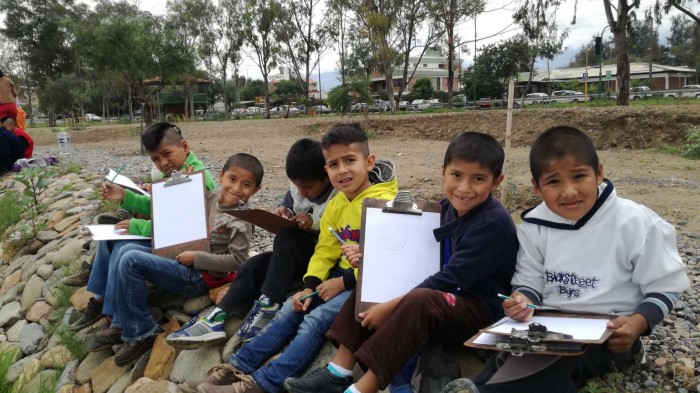
In the city of Cochabamba, in response to the plight of vulnerable children and the violation of their fundamental rights, the CSP runs Casa San José, a temporary shelter specifically for boys and young men who are at social risk or living on the streets. Our work is educational, therapeutic and rehabilitative in nature, aimed at helping children to come to terms with the traumatic experiences they have endured. The main objective is to restore the child’s right to grow up in a safe environment. We therefore prioritise a swift and coordinated return to their family.
HEALTH, WATER AND MUNICIPAL SANITATION
In the municipality of Independencia, where the mountainous terrain and the lack of basic services and infrastructure isolate the population, we have developed a comprehensive environmental and community health programme: Primary healthcare:
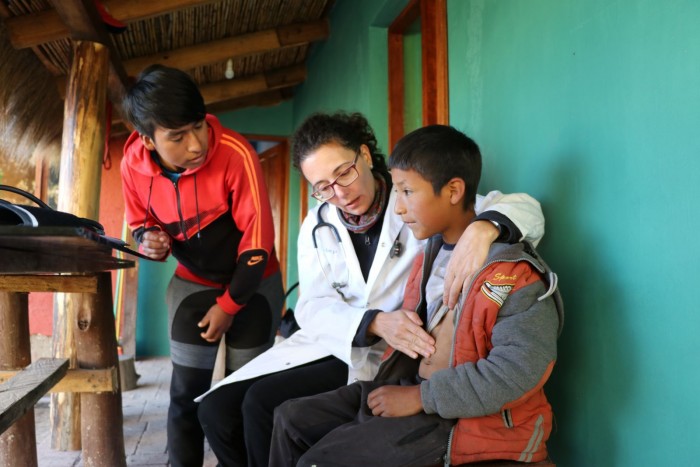
Given the complete lack of local pharmacies and the financial barriers, we guarantee the right to healthcare through a fully equipped medical clinic and the provision of essential medicines at affordable prices. Medical care is complemented by home visits for the seriously ill, older people and people with disabilities, as well as specialised initiatives such as eye tests and the provision of spectacles. Basic sanitation
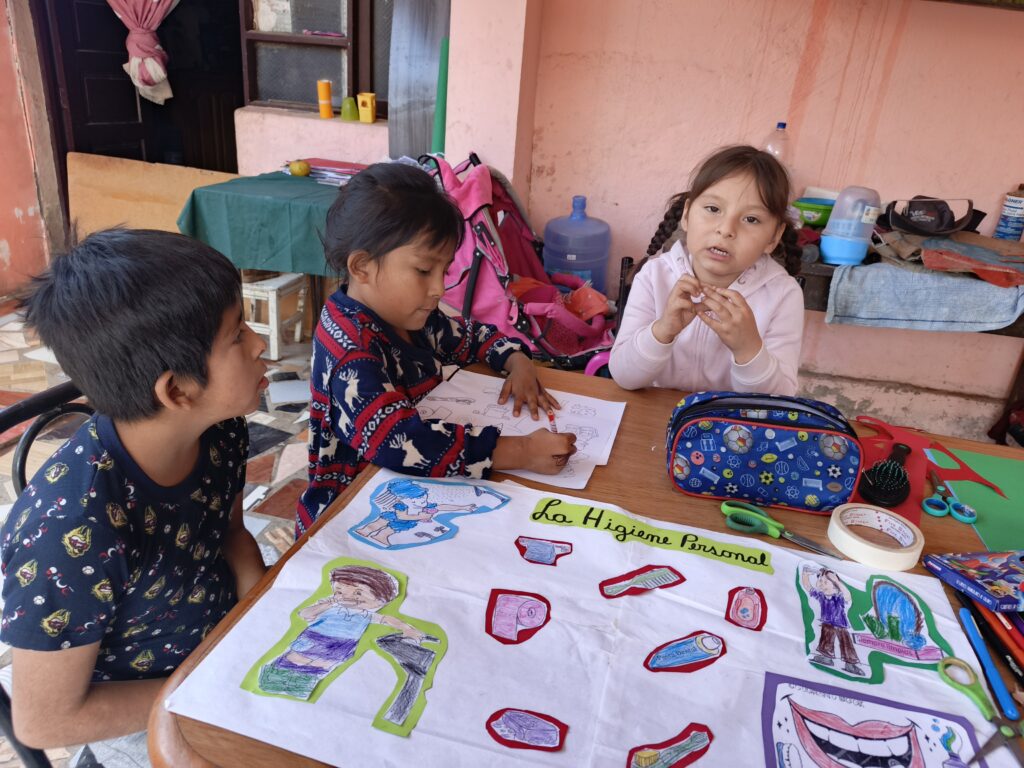
To improve the quality of daily life and reduce infectious diseases, we build single-family sanitation units that completely transform hygiene in households. These modules include a toilet and a hot-water shower system, and are accompanied by awareness-raising workshops on hygiene habits and environmental care.
Drinking water systems
We design and implement gravity-fed water infrastructure in rural communities. The technical work ranges from collecting water from natural sources in higher-lying areas to laying distribution networks to provide household connections, ensuring a constant, safe and clean supply that eliminates the need to carry water by hand.
Given the complete lack of local pharmacies and the financial barriers, we guarantee the right to healthcare through a fully equipped medical clinic and the provision of essential medicines at affordable prices. Medical care is complemented by home visits for the seriously ill, older people and people with disabilities, as well as specialised initiatives such as eye tests and the provision of spectacles. Basic sanitation
To improve the quality of daily life and reduce infectious diseases, we build single-family sanitation units that completely transform hygiene in households. These modules include a toilet and a hot-water shower system, and are accompanied by awareness-raising workshops on hygiene habits and environmental care.
Drinking water systems
We design and implement gravity-fed water infrastructure in rural communities. The technical work ranges from collecting water from natural sources in higher-lying areas to laying distribution networks to provide household connections, ensuring a constant, safe and clean supply that eliminates the need to carry water by hand.
PROMOTION AND EMPOWERMENT OF RURAL WOMEN
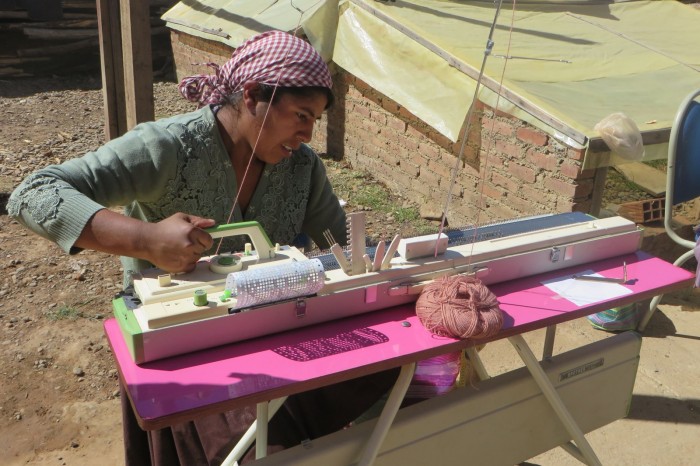
Recognising that equity and community development depend on valuing the role of women, we are running a vocational training programme in rural communities in the municipalities of Independencia and Vacas. Through workshops on artisanal textile production (both by hand and by machine), participants learn a technical skill and create their own spaces for dialogue about the issues they face in their daily lives.
This holistic training programme promotes women’s economic independence and self-esteem. A clear example of this impact is the establishment of groups of experienced craftswomen, such as the ‘Andina Warmis’ group, who produce high-quality garments from alpaca wool for sale.
This holistic training programme promotes women’s economic independence and self-esteem. A clear example of this impact is the establishment of groups of experienced craftswomen, such as the ‘Andina Warmis’ group, who produce high-quality garments from alpaca wool for sale.
EDUCATION AND TECHNICAL TRAINING
To tackle school drop-out rates and break the cycle of exclusion faced by young people in rural areas due to a lack of educational facilities in their communities, the CSP is based on three educational pillars:
Totorani Technology Centre:
Located in Independencia and endorsed by the Ministry of Education, it is a leading centre that promotes local trades. It offers formal technical training to young people and adults in specialisms such as motorbike mechanics, handcrafted weaving and textile manufacturing, acting as a driving force for productive development.
Scholarships for higher education
We facilitate access to technical higher education for young people from rural areas by covering their expenses and ensuring they have accommodation in student halls of residence in the city of Cochabamba, thereby preventing them from giving up on their goals due to a lack of resources.
Transport and Academic Support
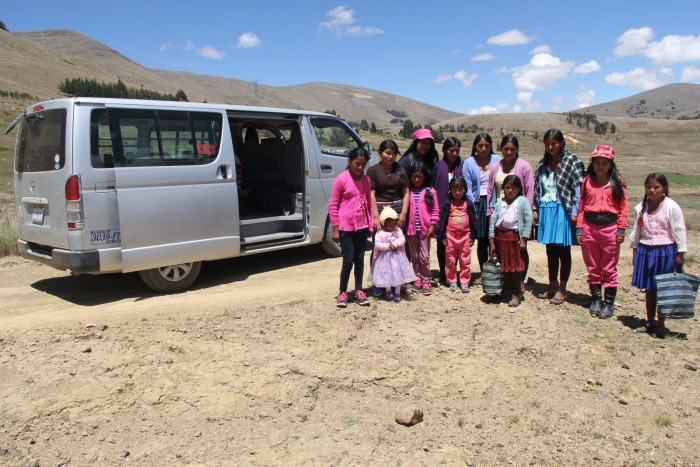
In the municipality of Vacas, we run a special needs school transport service to take pupils living in villages furthest from the school to and from school every day, so they do not have to walk long distances. This programme is complemented by academic support classes to help ensure they remain in the education system.
Totorani Technology Centre:
Located in Independencia and endorsed by the Ministry of Education, it is a leading centre that promotes local trades. It offers formal technical training to young people and adults in specialisms such as motorbike mechanics, handcrafted weaving and textile manufacturing, acting as a driving force for productive development.
Scholarships for higher education
We facilitate access to technical higher education for young people from rural areas by covering their expenses and ensuring they have accommodation in student halls of residence in the city of Cochabamba, thereby preventing them from giving up on their goals due to a lack of resources.
Transport and Academic Support
In the municipality of Vacas, we run a special needs school transport service to take pupils living in villages furthest from the school to and from school every day, so they do not have to walk long distances. This programme is complemented by academic support classes to help ensure they remain in the education system.
AGROFORESTRY DEVELOPMENT AND CLIMATE ADAPTATION
Food security is essential to ensuring the stability of farming families in the face of the effects of climate change and prolonged droughts. We implement sustainable projects focused on:
Agroforestry and irrigation
We manage high-altitude nurseries for reforestation with pine trees, which help to combat soil erosion, whilst also planting fruit trees. To ensure the plants’ survival, we have replaced traditional irrigation methods with advanced drip irrigation systems, thereby optimising water use as much as possible.
Family greenhouses
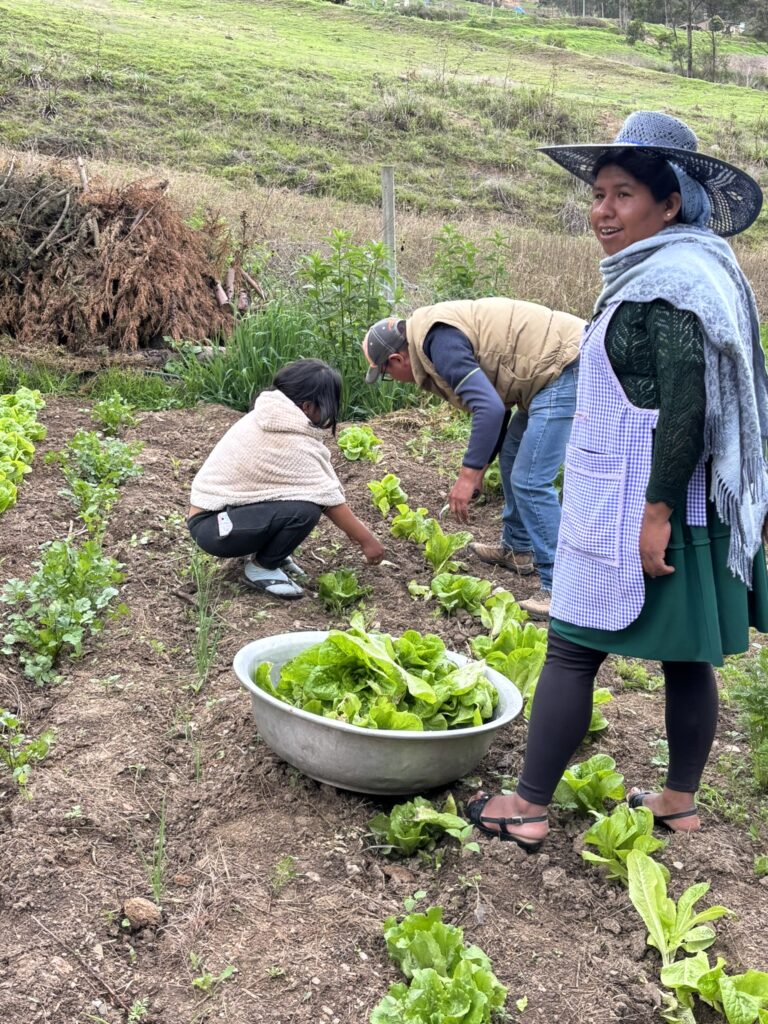
In high-altitude areas situated at over 2,800 metres above sea level, where the extreme cold prevents outdoor cultivation, we build family greenhouses based on a model of shared responsibility. These modules enable the independent production of fresh vegetables, radically improving family nutrition.
Water infrastructure
We have replaced the old earthen canals with piped irrigation systems, thereby eliminating water losses due to seepage and ensuring that family vegetable gardens are properly irrigated.
Agroforestry and irrigation
We manage high-altitude nurseries for reforestation with pine trees, which help to combat soil erosion, whilst also planting fruit trees. To ensure the plants’ survival, we have replaced traditional irrigation methods with advanced drip irrigation systems, thereby optimising water use as much as possible.
Family greenhouses
In high-altitude areas situated at over 2,800 metres above sea level, where the extreme cold prevents outdoor cultivation, we build family greenhouses based on a model of shared responsibility. These modules enable the independent production of fresh vegetables, radically improving family nutrition.
Water infrastructure
We have replaced the old earthen canals with piped irrigation systems, thereby eliminating water losses due to seepage and ensuring that family vegetable gardens are properly irrigated.
Strengthening the Livestock Sector and High-Altitude Livestock Farming
Livestock represents the savings and financial security of Andean families. For this reason, the CSP provides ongoing technical and veterinary support to improve livestock production in the region:
Sheep Breeding Improvement
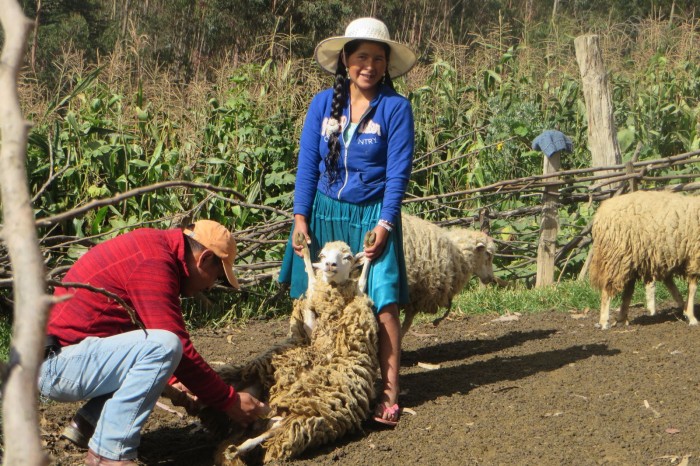
In the municipality of Independencia, we carry out regular deworming and clinical care programmes. In addition, we have set up a revolving fund to provide selected breeding rams, with the aim of introducing new bloodlines into the native flocks, thereby preventing inbreeding and improving the quality of the meat and wool.
Promoting the camelid sector
In the higher-altitude areas of Vacas, we are promoting llama breeding by providing animals of high genetic quality and training in animal health, thereby establishing camelids as a strategic and resilient resource for the family economy.
Community income-generating initiatives
We promote local initiatives tailored to the local environment, such as the gathering, drying and sale of wild mushrooms by young women, enabling them to generate their own income to fund their studies and personal needs.
Sheep Breeding Improvement
In the municipality of Independencia, we carry out regular deworming and clinical care programmes. In addition, we have set up a revolving fund to provide selected breeding rams, with the aim of introducing new bloodlines into the native flocks, thereby preventing inbreeding and improving the quality of the meat and wool.
Promoting the camelid sector
In the higher-altitude areas of Vacas, we are promoting llama breeding by providing animals of high genetic quality and training in animal health, thereby establishing camelids as a strategic and resilient resource for the family economy.
Community income-generating initiatives
We promote local initiatives tailored to the local environment, such as the gathering, drying and sale of wild mushrooms by young women, enabling them to generate their own income to fund their studies and personal needs.
Environmental project
Both in the Independencia area and in the municipality of Vacas, a pine reforestation programme is being carried out to improve the land. Several local families are involved in the project, both in the production of pine seedlings at the high-altitude nursery and in the subsequent planting of the seedlings on the land. This multi-year project is helping to counteract the significant deforestation in the area and ensures an improvement in the production of timber, firewood and other materials to meet the needs of the local population.